
(Use the following links to jump to the associated section in the main data.)
| Normal List
| |||||||||||||||||||||||||
|
|
||||||||||||||||||||||||
| Origin: | |||||||||||||||||||||||||
| Indigenous | |||||||||||||||||||||||||
| Distribution: | |||||||||||||||||||||||||
| The Sal tree occupies two principal regions in India. The first is a belt at the foot of the Himalaya and running into its valleys and up its lower hills to 3000 or 4000 ft. It is found in the Kangra valley, in the Ambala Siwaliks west of the Jamuna, Dehra Dun, Saharanpur, Bijnor, Kumaon, Oudh, Gorakhpur, Nepal, the Darjeeling Terai, W. and E. Duars, Assam valley. The second is the Central Indian belt, and the Sal country begins on the Ganges near Rajmehal, Sonthal, Parganas, Rewab, Chota Nagpore, C.P., Orissa and the Northern Circars, Palkonda range of Vizagapatnam and the forests of Jaipur. | |||||||||||||||||||||||||
| Description: | |||||||||||||||||||||||||
| A large gregarious tree, never quite leafless. Bark of young trees smooth, with a few long, deep, vertical cracks; of old trees 1 to 2 inches thick, dark coloured, rough, with deep longitudinal furrows. | |||||||||||||||||||||||||
| Wood Properties: | |||||||||||||||||||||||||
| Wood sapwood small, whitish, heartwood brown, pale when first cut, but darkening on exposure, coarse-grained, hard, with a remarkably fibruous and cross-grained structure; the fibres of alternate belts in the wood on a vertical section running in opposite directions, so that when the wood is dressed a very sharp plane is necessary or it will not get smooth, does not season well. The wood weighs to 50 lbs cft. It is very difficult wood to season, it warps and splits in drying and even when thoroughly seasoned, it absorbs moisture with avidity in wet weather, increasing 1/24 in bulk, and correspondingly in weight. Sal when once thoroughly seasoned, stands almost without a rival, as a timber, for strength, elasticity and durability, which qualities it retains without being sensibly affected, for an immense length of time. | |||||||||||||||||||||||||
| Durability: | |||||||||||||||||||||||||
| Sal heartwood is a naturally durable wood, and usually remains immune to attack by white ants and fungi for a long period. | |||||||||||||||||||||||||
| Uses: | |||||||||||||||||||||||||
| House building, (posts, beams, door and window frames), bridge construction, piles, railway-sleepers, strong articles of furniture, ploughs, rice pounders, oil-mills, mortars, spinning wheels, carts, shafts, axles, yokes, solid cart wheels, well construction, dugout canoes, helms, oars, masts and spars, coopers work, lager-bier, large storage vats, draught poles, yokes swingle trees, hand spike, frames of carts and tongues, levers, planking for store carts, frames of wheel barrows, bale hoopes, transporting boxes, head and handles of mauls. | |||||||||||||||||||||||||
| Wood Infesting Insects: ( Click any one Wood Infesting Insect to view details) | |||||||||||||||||||||||||
|
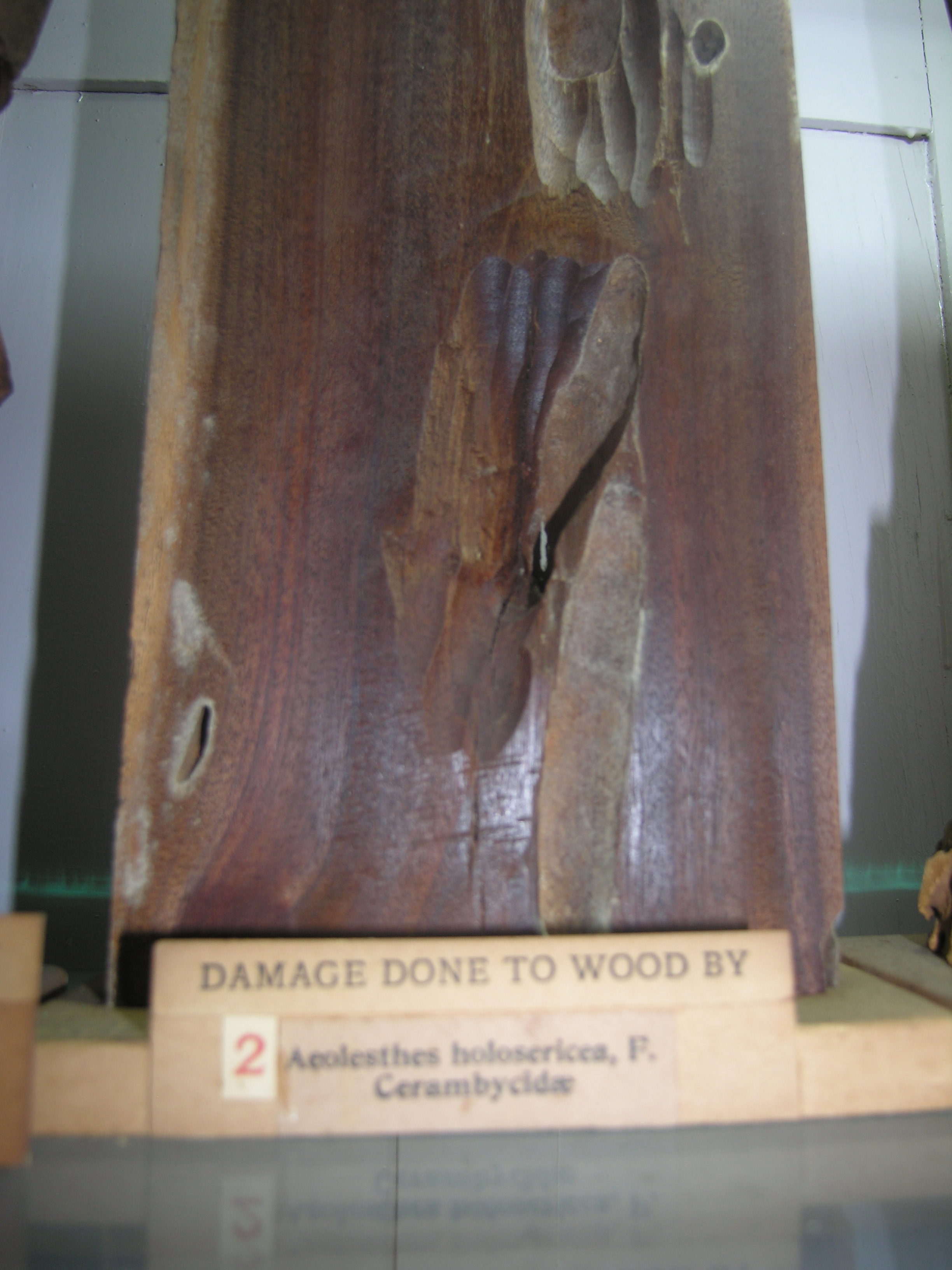
2 Microcerotermes crassus Synder 3 Mecistocerus fluctiger Faust 4 Coptops aedificator Fabricius 5 Hoplocerambyx spinicornis Newn. Click Here.... For more Wood Infesting Insects
| |||||||||||||||||||||||||
| 1 | http://wgbis.ces.iisc.ernet.in/biodiversity/database/?q=node/3 |
| 2 | Gamble,J.S 1972. A Manual of Indian Timbers,Prashant Gahlot at Valley Offset Printers and Publishers,Dehra Dun. |
| 3 | Troup,R.S.1986.Indian Woods and their uses , Soni Reprints Agency,Delhi. |