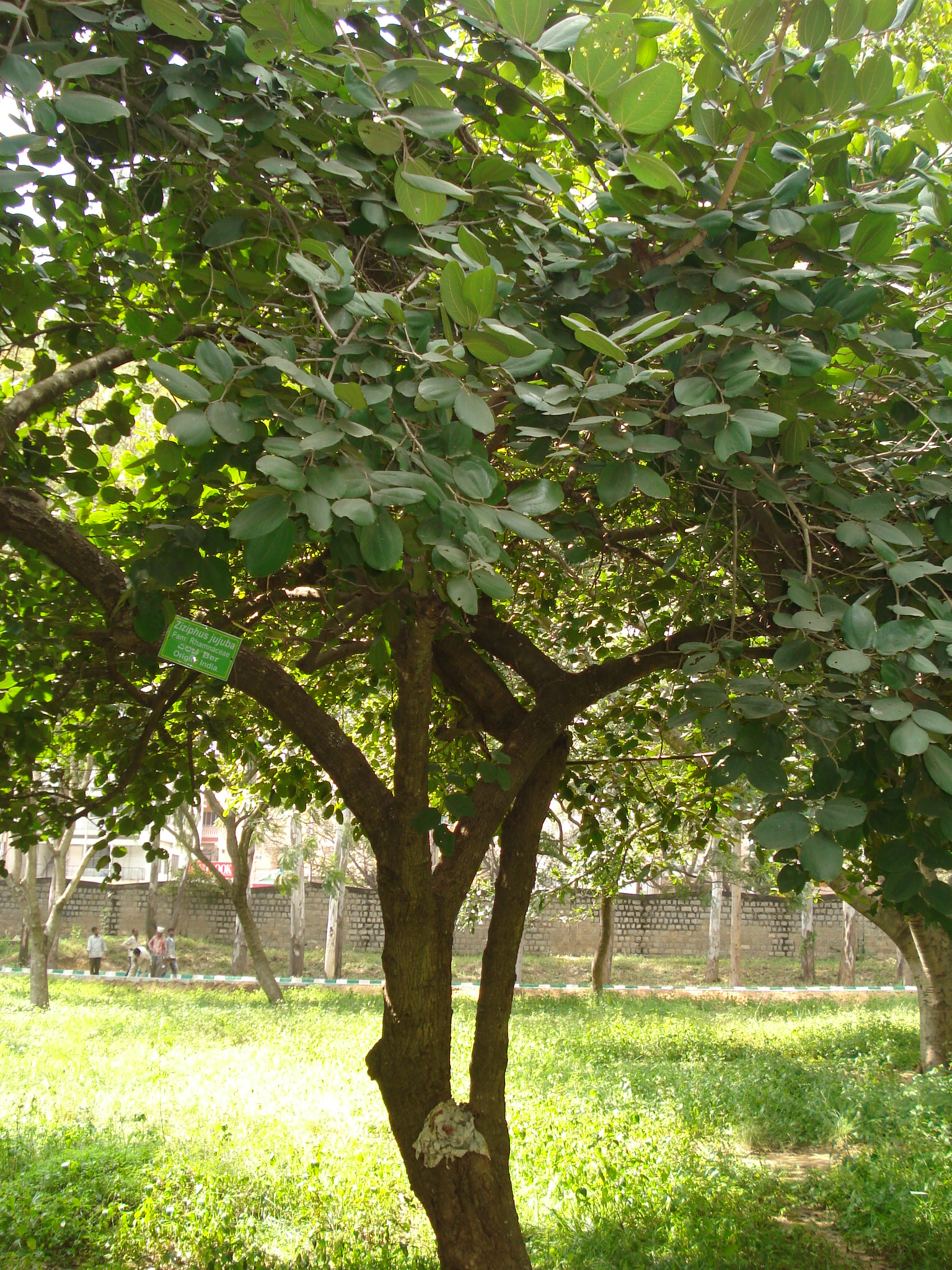
|
|
|
Botanical Name: |
Ziziphus
jujuba
P.Mill.
|
| Synonyms: |
|
Zizyphus
ziziphus
(L.)
Karst.
|
| Common Name: |
| Ber, Beri (Hindi); Kul (Bengal); Yelcha (Kannada); Zi (Burma). |
|
|
|
|
| Origin: |
| Indigenous |
| Distribution: |
| Forests of Siwaliks, sub-Himalayan tract of Punjab and North Western Provinces, Deccan and Upper Burma, Ceylon dry forests. |
| Description: |
| A moderate-sized deciduous evergreen tree. Tree grows to a height of 80 ft. and a girth of 17 ft. Bark dark grey, nearly black, with irregular cracks. |
| Wood Properties: |
| Wood hard, reddish, no heartwood. The timber is hard and tough. |
| Durability: |
| Moderately durable in the open and it may be classed as durable under cover. Ziziphus jujuba is highly valued because it is resistant to termites, hence has more durability. |
| Uses: |
| House building, (posts and beams), well construction, oil mills, yokes, harrows and other agricultural implements, handles of axes, hoes, saddle trees, bedstead legs, tent-pegs, golf-clubs, gunstocks, shafts, axles of carts, naves, spokes, felloes of wheels, Persian wheels, toys, turnery. |
| Wood Infesting Insects: ( Click any one Wood Infesting Insect to view details) |
|
1
Celosterna
scabrator
Fabricius
|
| Reference: |
|
|
1
| http://en.wikipedia.org/wiki/list of indian timber trees |
|
|
2
| Troup,R.S.1986.IndianWoods and their uses Soni Reprints Agency,Delhi. |
|
|
3
| http://www.vidyaonline.net/arvindgupta/parkertrees.pdf. |
|
|
4
| http://www.catalogueoflife.org |
|
|
5
| Gamble,J.S 1972. A Manual of Indian Timbers,Prashant Gahlot at Valley Offset Printers and Publishers,Dehra Dun. |
|
|
6
| http://wgbis.ces.iisc.ernet.in/biodiversity/database/?qnode/3 |
|
|
7
| http://www.fao.org/DOCREP/006/AD316E/AD316E10.htm |
|
|
8
| Pearson, R. S. and Brown, H. P. 1932. Commercial Timbers of India. Vol I. Central Publication Branch. Calcutta. |
|
|